
Influencer Marketing Statistics 2026: Market Size, Growth & 120+ Data Points
SHERIDAN, WY / ACCESS Newswire / March 17, 2026 / Influencer marketing has grown from a niche awareness tactic into one of the most important channels in modern digital marketing. Brands now use creators not only for reach and engagement, but also for product discovery, content production, affiliate-driven sales, and measurable campaign performance. Recent benchmark and market research show the channel is continuing to mature as both a branding and performance lever.
For marketers, founders, agencies, creators, and investors, understanding the numbers behind influencer marketing matters more than ever.
The channel is no longer defined only by follower counts or one-off sponsored posts. It is increasingly shaped by platform mix, creator tiers, measurement quality, in-house execution, and the software infrastructure that helps brands discover creators, manage campaigns, and evaluate ROI.
Below is a breakdown of influencer marketing statistics for 2026, including market size, growth trends, platform preferences, campaign structures, and performance signals.
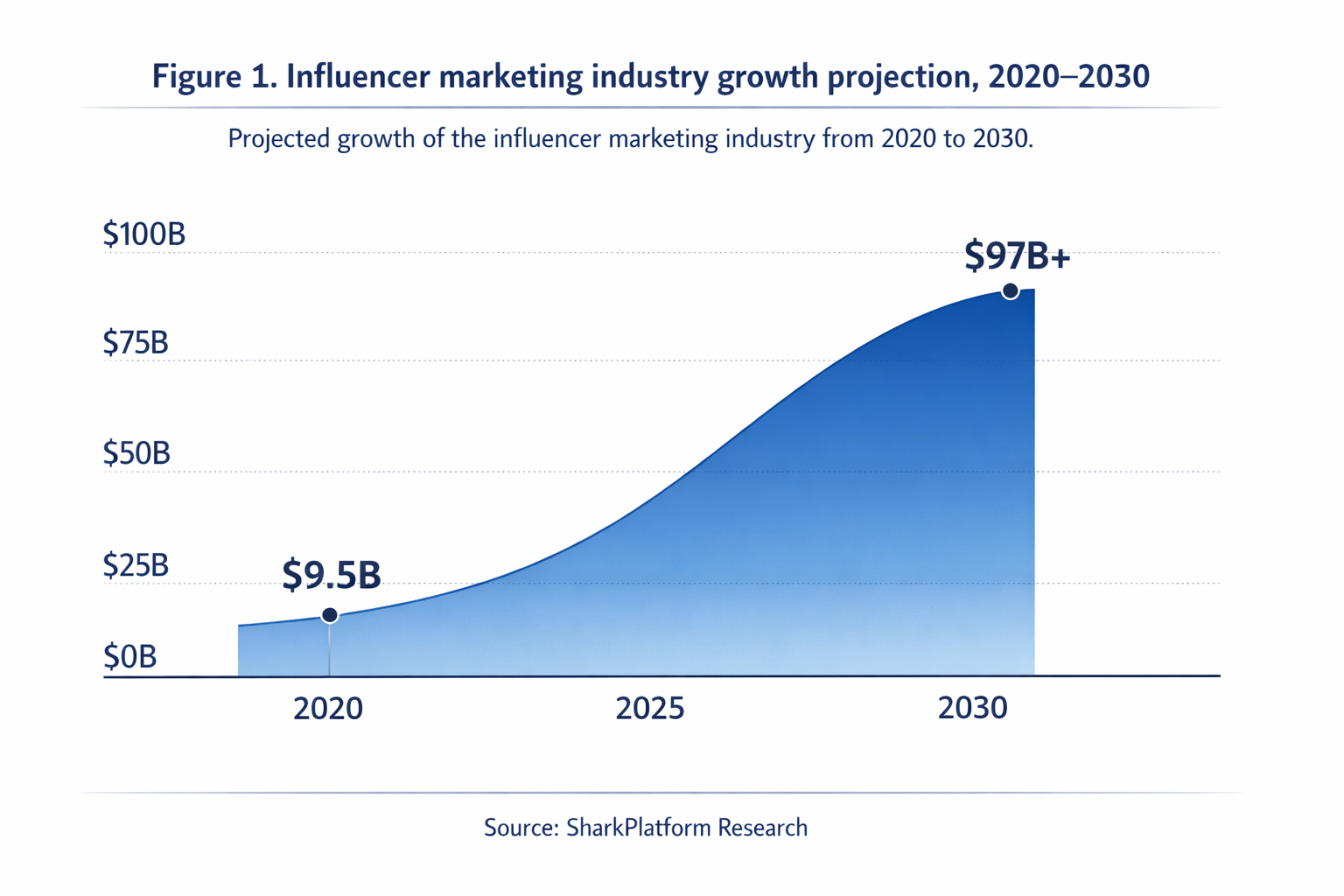
Influencer Marketing Market Size Statistics
Influencer marketing market-size figures can vary depending on what is being measured. Some reports focus on the broader influencer marketing industry, while others focus specifically on the platform and software layer that supports campaign discovery, workflow, and analytics. On the platform side, Grand View Research estimates the global influencer marketing platform market at $25.44 billion in 2024 and projects it to reach $97.55 billion by 2030, growing at a 23.3% CAGR from 2025 to 2030.
On the broader industry side, Influencer Marketing Hub says influencer marketing reached $32.55 billion in 2025. Even when different sources use different methodologies, the direction is clear: the category has expanded rapidly and continues to attract more serious brand investment.
Influencer Marketing Growth Statistics
Growth in influencer marketing is no longer driven only by hype. It is increasingly supported by broader shifts in how brands buy media and how consumers discover products. As social platforms have become central to content consumption and commerce, influencer marketing has gained a larger role in both awareness and conversion-focused campaigns. Grand View Research attributes a significant portion of platform-market growth to AI and machine-learning integration, stronger influencer discovery, and better campaign optimization workflows.
Adoption data also supports this growth story. Sprout Social reports that 86% of U.S. marketers are expected to partner with influencers in 2025, while its 2025 influencer report says 59% of marketers plan to partner with more influencers in 2025 than they did in 2024.
Brand Adoption and Operating Model Statistics
One of the clearest signs of maturity is that more brands are building influencer marketing capabilities internally. Influencer Marketing Hub reports that 76.2% of influencer campaigns are now run in-house, while 57.5% of respondents use a third-party platform to support their influencer efforts. That combination suggests that brands increasingly want direct ownership of influencer strategy while still relying on software to manage scale, workflow, and reporting.
That is an important shift. Influencer marketing is no longer just a specialist agency activity or an experimental side channel. It is increasingly being treated like a repeatable operating function inside modern marketing teams, especially at ecommerce and performance-driven brands.
Platform Statistics
Platform mix remains one of the most important decisions in influencer strategy. Sprout Social reports that 57% of brands prefer Instagram for influencer campaigns, followed by TikTok at 52% and YouTube at 37%.
These numbers reflect different campaign roles. Instagram remains a strong fit for visual commerce, branded partnerships, and creator-led lifestyle marketing. TikTok continues to benefit from high discovery potential and short-form content velocity. YouTube remains especially important where brands want deeper storytelling, stronger search visibility, or more durable evergreen content. In practice, influencer marketing is becoming more multi-platform over time rather than less.
Creator and Influencer Income Statistics
Influencer monetization is increasingly diversified. Brand sponsorships remain central, but creators are also earning through affiliate programs, product collaborations, subscriptions, UGC deals, and platform-native monetization features. That broader monetization mix is part of why influencer marketing now overlaps so heavily with creator commerce and affiliate marketing. A deeper breakdown of creator monetization models is available in SharkPlatform's guide on how influencers make money.
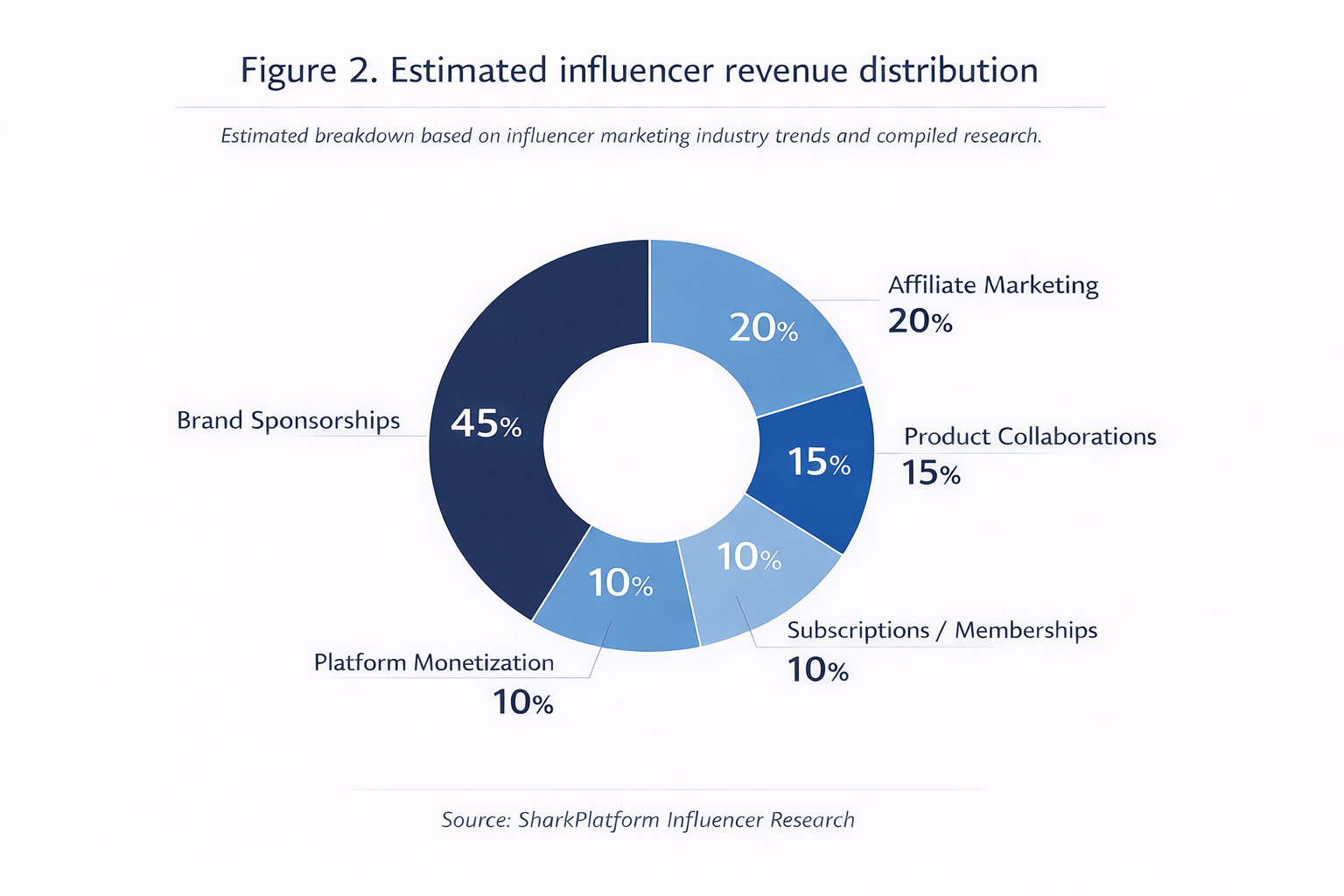
Longer-term partnerships are also becoming more attractive. Sprout Social reports that 71% of influencers offer lower rates for long-term partnerships and are open to negotiating discounts for multi-post campaigns. That matters because it shows how influencer marketing is shifting away from purely transactional one-off posts and toward more structured creator relationships.
Campaign Performance and ROI Statistics
Influencer marketing continues to be seen as effective because it combines distribution with trust. Influencer Marketing Hub reports that over 80% of marketers affirm the effectiveness of influencer marketing. At the same time, the channel is facing sharper measurement expectations as brands compare it more directly with paid social, search, affiliate, and other accountable growth channels.
That performance focus is becoming more important because the strongest programs are no longer just the ones with the biggest creators. They are the ones with a clear platform strategy, reliable creator selection, measurable outcomes, and repeatable workflows.
Engagement Statistics
Engagement remains one of the biggest reasons brands continue to work with smaller creators. Sprout Social reports that Instagram micro-influencers have an average engagement rate of 0.99%, which it describes as the highest across influencer tiers, including celebrities.
For brands, that matters because engagement is often tied to trust, community fit, and conversion potential. It is one reason nano- and micro-influencers continue to play such an important role in influencer strategies, particularly for brands focused on authenticity, niche targeting, or creator-led commerce.
Influencer Marketing Trends in 2026
Several themes are shaping the next phase of influencer marketing. First, influencer marketing increasingly overlaps with affiliate marketing and creator commerce. Second, software and AI are becoming more important in creator discovery, campaign planning, and measurement. Third, brands are putting more pressure on attribution and performance visibility. And fourth, multi-platform creator strategies are becoming more common as brands avoid depending too heavily on a single channel.
This is why the category is evolving from simple influencer campaigns into a broader creator-led growth model. Additional creator and influencer intelligence resources are available through SharkPlatform's research hub.
The winners are likely to be brands that combine platform discipline, creator fit, long-term partnerships, and better analytics rather than those that simply chase reach.
The Future of Influencer Marketing
The long-term outlook remains strong. Market research points to continued growth in the platform layer, while benchmark studies show that brands are still increasing adoption, refining workflows, and moving toward more structured internal ownership. In practical terms, influencer marketing is becoming more institutional, more measurable, and more integrated into broader marketing operations.
For brands, the future of influencer marketing is likely to center on better creator selection, stronger measurement, multi-platform distribution, and more durable partnerships. For creators, the future is likely to reward trust, niche authority, and monetization diversity. For software and intelligence platforms, the opportunity lies in helping both sides operate with more clarity and less waste.
Final Thoughts
Influencer marketing is no longer a side tactic in digital marketing. It is a large and increasingly sophisticated channel shaped by creator behavior, brand adoption, social-platform economics, and growing demand for measurable outcomes. For marketers, founders, agencies, and investors, understanding the data behind the industry is becoming more important every year.
Media Contact:
SharkPlatform
Media Relations
[email protected]
https://sharkplatform.com
SOURCE: SharkPlatform
Information contained on this page is provided by an independent third-party content provider. XPRMedia and this Site make no warranties or representations in connection therewith. If you are affiliated with this page and would like it removed please contact [email protected]
